• Home
  • About
    • About CanningCraft
    • Bio
  • Classes
    • 2012 Classes
    • 2011 Classes
    • 2010 Classes
  • Contact
  • Television
Feed
  • Sweet Days of March

    Apr 27th 2012

    By: Allison

    No comments

    maple sugaring 2012

    I know…. it’s a bit out of season to be talking about maple syrup in late April, with the buds coming out on the trees  and all…..but somehow the month of March seemed to slip away from me this year.  Still, we spent so much of that month boiling down sap and making maple syrup that I thought I would share–even if I am a month late .  Last year we boiled our sap down on our stove in the kitchen, which worked fine since we had a very powerful hood over the stove, but this year, at the new place, we needed a better set up.  We have more trees now (and consequently lots more sap to deal with) and the stove at our new place is lacking a hood, so it was clear to us that the kitchen was not going to be an option.  So Ben decided to build an evaporator pan.  He got a few ideas for designs from various books, bought a large piece of stainless steel from a local industrial supply place (yes, it was quite a challenge fitting it into the Honda Civic), and hammered it together.  Bending the stainless steel proved to be more difficult than he’d anticipated (and reminded him that he really does need torch and a welder), but he made it work–as he somehow always does.  There were two stoves made from old barrels that had been left in the barn when we bought the new house, and Ben cut a big hole in the top of one of them to accommodate the evaporator pan.  Then it was just a matter of keeping the fire going, keeping the pan filled with sap, and lots and lots of boiling.  We started with about 68 gallons of sap, which we boiled down over several weekends in March, and at the end of it all, we were left with little bit more than 1 3/4 gallons of syrup.  It’s a small yield for sure, but we were pleasantly surprised that we ended up with as much syrup as we did actually, as we’d heard that due to the warm weather it was a really terrible year for many of the commercial syrup producers.  Of course we love the end result of have home-produced syrup to enjoy, but we also just really enjoy the process of making it. And this year was even more fun, doing the boiling outdoors. On our final day of boiling, we were out well into the evening trying to finish up the last of it.  Sitting around the stove, on a clear, crisp night bright with stars, occasionally tasting the hot, slowly-sweetening sap….well, I couldn’t have asked for a better late-march saturday night than that.

    maple sugaring 2012

    maple sugaring 2012

    maple sugaring 2012

    maple sugaring 2012

    maple sugaring 2012

    maple sugaring 2012

    maple sugaring 2012

    maple sugaring 2012

    maple sugaring 2012

    • Tweet
    • Share on Tumblr
    • submit to reddit

    Uncategorized

  • Orange Marmalade on 207!

    Apr 17th 2012

    By: Allison

    No comments

    I meant to post this last week, but it seems time has been scarce around here!  In any case, a couple of weeks ago I was in the 207 kitchen again–this time making orange marmalade……here’s the spot, in case you missed it!


    Video copyright WCSH 6, Portland, Maine

    • Tweet
    • Share on Tumblr
    • submit to reddit

    Uncategorized

  • Tapping Time

    Mar 13th 2012

    By: Allison

    No comments

    tapping time, feb. 2012

    Back in mid-February, when we had a brief thaw and it felt a bit spring-like, we tapped the first of our maple trees.  We are still getting the lay of the land here–discovering new things about the place as we go, and it proved to be an exiting challenge trying to recognize which trees are maples during the winter when they’re stripped of all their foliage.  We don’t have a lot of maples, but we did find a decent handful, fortunately.  Last year, when we were still living in Portland, we tapped our one and only maple tree (actually, it was growing out of the sidewalk in front of our house, so it probably wasn’t officially on our property, but fortunately no one seemed to mind!)  We used a five gallon bucket, plastic taps, and plastic tubing.  That worked pretty well, and we got a decent amount of sap out of the tree, but now that we have a few more trees, we decided to tweak our system a bit.  We considered purchasing the traditional metal buckets, and aesthetically-speaking they are my first choice by far, but we found them to be a bit pricey.  So we opted for a system similar to last year, with a couple of significant changes.  We’re using the plastic tubing, but instead of plastic taps we went for sturdier metal ones this year, as the plastic taps broke when we pulled them from the tree last season.  For sap collection containers, we’re going with an option that I recall reading about at one point (though I can’t remember where)– recycled five gallon plastic screw top cooking oil containers.   We found  a few local Chinese restaurants that were happy to give them away, barely blinking an eye at our request (unlike when Ben asked at one particular chain restaurant and they looked at him like he was totally nuts and yes they might have oil jugs but no they could not possibly help him).  Anyway, we managed to scrounge up enough of them from other places, and after scrubbing them clean of oil residue (which was a bit laborious, I admit), they were ready to go.  Best of all, they were free!  The best part of the process as far as Connor and Ian were concerned, though, was the actual tapping the tree part. Not only did it require the use of a drill (which adds excitement to any project) but, like magic, sap immediately started to drip out of the tree.  Positioning themselves under the taps, the boys caught drops of the watery liquid in their mouths, excited by the the tiniest bit of sweetness they imagined they could taste–and surely anticipating the great sweetness this sap would become.

    tapping time, feb. 2012

    tapping time feb. 2021

    tapping time, feb. 2012

    tapping time, feb. 2012

    tapping time, feb. 2012

    tapping time, feb. 2012

    tapping time, feb. 2012

    tapping time, feb. 2012

    • Tweet
    • Share on Tumblr
    • submit to reddit

    Uncategorized

  • Everyday Apple-Carrot Muffins

    Feb 26th 2012

    By: Allison

    No comments

    Ben's birthday 2011/everyday apple-carrot muffins

    I love muffins.  Connor and Ian love them just as much–probably more, even.  I’m pretty sure this has something to do with the fact that these breakfast treats are suspiciously similar to that ever-popular dessert of a comparable shape and size…..yes, I’m talking about the cupcake.  It seems to me that the average muffin and the average cupcake are so similar that if not for the time of day, and the frosting (or lack thereof) giving us a clue, I doubt most of us (myself included) would know the difference.  Now, I’ll be the first to admit that I have a huge sweet tooth, so I’m not exactly disappointed that most muffins taste pretty much like cake.  Still, I don’t feel great about serving such super-sweet fare for breakfast as a regular, everyday thing.  So, I’ve recently worked up a recipe for muffins that are not too sweet, and have enough good stuff in them that I’m happy for the boys to enjoy them daily.  And that is exactly what they have been doing.

    Everyday Apple-Carrot Muffins
    Makes 12 muffins

    Ingredients:
    1 1/2 cups flour
    1 tablespoon baking powder
    1/4 teaspoon salt
    1 teaspoon cinnamon
    1/2 teaspoon ground ginger
    1/4 teaspoon nutmeg
    1/4 teaspoon allspice
    1/4 teaspoon cloves
    2 eggs
    1/4 cup sunflower seed oil (canola oil or regular vegetable oil will also work)
    1/4 cup honey
    1 1/2 cups shredded carrots, lightly packed
    1 1/2 unsweetened apple sauce
    1/2 cup chopped walnuts
    1/2 cup raisins

    Directions:
    1.) Pre-heat oven to 400 degrees.  Grease muffin tins.
    2.) In a large mixing bowl combine flour, baking powder, salt, and all spices.  Mix well, then set aside.
    3.) In a separate mixing bowl, combine eggs, oil, honey, shredded carrots, apple sauce, chopped walnuts, and raisins.  Mix thoroughly.
    4.) Pour the liquid ingredients into the bowl of dry ingredients.  Mix gently to combine the liquid and dry ingredients.  Do not over-mix!  (It’s OK if you find an occasional little clump of flour in the batter.)
    5.) Spoon the batter into the muffin tins.  Bake muffins at 400 degrees for 16-20 minutes.  Allow muffins to cool slightly before removing them from the tins.  Enjoy!

    Ben's birthday 2011/Everyday Apple-carrot muffins

    Ben's birthday 2011/Everyday Apple-carrot muffins

    Ben's birthday 2011/Everyday Apple-carrot muffins

    Ben's birthday 2011/Everyday Apple-carrot muffins

    • Tweet
    • Share on Tumblr
    • submit to reddit

    Uncategorized

  • Faith in Old Apple Trees

    Feb 19th 2012

    By: Allison

    No comments

    apple picking/apple sauce, 2011-2012

    Ok, I’ll just say it.  Ben and I and the boys have fallen totally in love with our new place.  The house is great, but it’s the land itself more than anything, really.  We love the way it feels–to walk on it, to work on it, to play on it….to just to be on it.  The boys love it for the wide open space it gives them to kick balls, swing sticks, and be just generally loud and wild.  Ben and I love it for all the potential it holds for future projects and crafting the life that we want.  And we all love tromping around on the land, over streams and through overgrown brush, slowly uncovering many long-hidden places, delighting in our finds both big and small.

    One of our most exciting discoveries so far is the apple orchard.  We knew before we bought the place that there were a few old apple trees on the property, but it’s been only recently, as we’ve worked our way through seemingly impenetrable walls of thorny, invasive rose vines and overgrown honeysuckle bushes, that we’ve discovered just how many trees there are.  We’ve counted over thirty so far, and there are still more areas to search, so it’s likely we’ll find a few more.  These are old trees for sure, and they clearly haven’t been pruned or otherwise tended to in a very long time.  A few of the trees look vaguely normal, others are absolutely enormous and overgrown, and still others are totally gnarled and growing in very weird shapes.  No question, these trees will need a LOT of help in order to revitalize them.  Yet, what gives us great  hope is this:  even in their neglected state, these trees produce a remarkable number of very tasty apples.   In the blur of our first days here this past fall, the four of us would tromp around through the dense brush, thrilled to uncover one tree after the next–almost all bearing decent amounts of fruit.  The apples were far from perfect of course (there were certainly plenty of worms in the apples), yet they were all surprisingly tasty.  If these trees can produce this well after who knows how many years of neglect, how well might they produce with a little love and attention?   We have a lot to learn, and a lot of work ahead of us, but we are excited and very hopeful.  We have faith in these trees.

    In the mean time, we’ve enjoyed the trees and their apples as they are.  We picked as many as we could this past fall, ate some fresh, and stored several bags in the cellar.  As I had time throughout November and December, I used them to make batches of apple sauce to can.  Just yesterday I went down to the basement to get our last bag of apples to make more sauce, but unfortunately the apples had been pretty much demolished by mice.  Oh well.  Clearly we don’t have our root cellaring scenario in our new place fully worked out yet!  At least I got quite a bit of sauce put up earlier……and with any luck, we’ll have a lot more apples for sauce next year.

    Apple Sauce
    Makes 6-7 quarts

    I like to make apple sauce all winter long–it’s a pantry staple in our home, and we go through a lot of it.  I prefer my sauce with a touch of cinnamon, and no added sugar, though you can add a bit of sweetener if you prefer. Once you get the apples peeled, the sauce quick and easy to make, and it’s a great way to use up any apples from the root cellar that might have gotten a bit soft, and re-stock supplies of canned sauce if it’s running low.  If you don’t have any fresh apples on hand and you prefer to use local ones, try a winter farmers market, if there is one near you.  In Maine at least, lots of vendors have local, root-cellared apples available throughout the winter.

    To do ahead of time:
    *Wash and rinse quart  jars, lids, and screw bands.  Set screw bands aside until ready to use.  Place jars in hot water bath canner, fill at least 2/3 of the way full with water, and bring to a boil.  Sterilize jars for 10 minutes, then turn down heat and let jars stand in hot water until ready to use.  Place lids in water in a small pan, bring to a low simmer, and hold there until ready to use.

    Ingredients:
    20 pound of fresh apples
    1 tablespoon ground cinnamon

    Directions:
    1.) Wash, peel, and core apples.  Slice the apples into quarters, or smaller pieces,  and place in a large pot.  Add about 3/4 cup water.

    2.) Bring apples to a boil on high, reduce heat slightly.  Cook apples, stirring frequently to help apples break down and to prevent sticking, for about twenty minutes, or until apples have turned to mush and the mixture has thickened just slightly.

    3.) Add the cinnamon, stir well to incorporate, and the sauce is ready to be canned.  If you prefer especially smooth apple sauce, you can run the sauce through a food mill at this point.  Then return it to the pot and bring it back to a boil before canning.

    4.) Remove hot jars from canner and immediately ladle hot apple sauce into jars, leaving 1/2 inch of headspace.  Remove trapped air bubbles and wipe rims with a damp cloth.  Carefully put on lids and screw bands, tightening to fingertip-tight.

    5.) Place jars in the hot water, ensuring that jars are covered with at least 1-2 inches of water.  Place a lid on the canner, return to a rolling boil, and boil for 20 minutes.  (Add one minute additional processing time for every 1000 feet above sea level.)

    6.) Turn off heat and allow canner and jars to sit untouched for 5 minutes.  Then, remove jars from canner, placing them on a cooling rack or dishtowel.

    7.) Allow jars to cool undisturbed for 12-24 hours. Then, confirm that jars have sealed.  Enjoy your apple sauce!  Or, store properly for later use.


    apple picking/apple sauce, 2011-2012

    apple picking/apple sauce, 2011-2012 apple picking/apple sauce, 2011-2012 apple picking/apple sauce, 2011-2012 apple picking/apple sauce, 2011-2012 apple picking/apple sauce, 2011-2012 apple picking/apple sauce, 2011-2012

    • Tweet
    • Share on Tumblr
    • submit to reddit

    Uncategorized

  • Cranberry-Ginger Chutney on 207

    Feb 7th 2012

    By: Allison

    No comments

    Back in early December I was on WSCH 6 in the 207 kitchen again–this time making one of my favorite holiday items–Cranberry-Ginger chutney.   We had it on the table for both Thanksgiving and Christmas this year, as well as many other meals in between.  I meant to post the video a while ago, but, well…..you know how that goes sometimes.  So, here it is now.  Enjoy!

    Video copyright WCSH6

    • Tweet
    • Share on Tumblr
    • submit to reddit

    Uncategorized

  • Goodbye Community Garden

    Jan 31st 2012

    By: Allison

    No comments

    harvesting brussels/goodbye community garden, Nov. 2011

    For a couple of months in the fall and early winter we were running back and forth frequently between our new place and our community garden plot–a good half-hour drive–to harvest all the hardy, remaining veggies.  The brussels sprouts were the last thing we pulled this year–in early December.  After a poor brussels sprout year for us last year, it was such a treat to get a good harvest of big, beautiful ones this time around.  The plants were so sturdy that they were surprisingly difficult to pull out of the ground!  Fortunately I had lots of help from Connor and Ian.  With the harvesting done, it was also time to put the garden to bed.  We pulled the last remaining kale stalks and dried up tomato plants, and I bagged them up to take home to our compost pile (I  know, I can’t resist–did I mention that I moved our entire compost pile in buckets from our old house to our new one?) Now that we have more than enough space for gardens at our new place, we won’t be needing our community garden plot any more.  I am of course thrilled  at that (more garden and outdoor space was one of the main reasons we moved), and I won’t miss the drive, but never the less, saying good bye was bitter sweet.  We put a lot of love and time and energy into our community garden plot over the past few years, and in return it was so generous and bountiful.  And frankly, I just loved being there–working in it, looking at it, or just sitting quietly in it.  I’m so looking forward to building gardens at our new home, but I’ll always remember our small unassuming plot, tucked away behind an urban elementary school at the back of a parking lot, with great fondness.  Thank you community garden plot!

    harvesting brussels/goodbye community garden, Nov. 2011

    harvesting brussels/goodbye community garden, Nov. 2011

    harvesting brussels/goodbye community garden, Nov. 2011

    harvesting brussels/goodbye community garden, Nov. 2011

    • Tweet
    • Share on Tumblr
    • submit to reddit

    Gardening, Gardening & Outdoors w/ Kids

    Gardening, Gardening & Outdoors w/ Kids

  • The Patience of Kale

    Jan 21st 2012

    By: Allison

    No comments

    Putting up the kale, Nov. 2011

    By mid-November, I was starting to feel a little bit guilty about the kale.  It had been quietly patient, waiting around in our garden without a fuss for me to finish dealing with the pears and the chard and all of the other higher-maintenance vegetables (not to mention all of the moving and boxes and unpacking), even though it had long-since been ready for harvesting.  That’s one of the things that I love so much about kale–it’s remarkable ability to wait–remaining strong and steady and vibrant all the while.  Can you imagine asking a green bean or a head of lettuce to wait to be picked for a month or two after reaching it’s prime, while still expecting it to be sweet and delicious? Not so much.  But still, it was time to give the kale a little love.  As strong and cold-hardy as it is, even kale can get a little weary after repeated frosts and thaws, and I was hoping to avoid that if possible.  So, during early November the boys and I harvested all of the kale and set about putting it up–which ended up taking several days.   Yes, this is much longer than I’d like it to take, but you know, this just seems to be how it is at our house these days.  We grew three different kinds–Red Russian, Winterbor, and Toscano, and, as with the chard, there were several trash-bags full to get into the freezer.   With winter looming, we tried to enjoy as much of the not-too-cold late fall weather as possible, doing all of the preserving outside.  I de-stemmed, washed, blanched and chopped as the boys played  (and occasionally helped).  Fortunately, kale is quite fun for the littles.  The big bunches are well-suited to parading with and waving around like flags, and the discarded stems are perfect for whacking the ground, rocks, dead trees, and the like–a perfect accessory for the general outdoor wildness of which my boys seem to be so fond.

    Putting up the kale, Nov. 2011

    Putting up the kale, Nov. 2011

    Putting up the kale, Nov. 2011

    Putting up the kale, Nov. 2011

    Putting up the kale, Nov. 2011

    Putting up the kale, Nov. 2011

    Putting up the kale, Nov. 2011

    Putting up the kale, Nov. 2011

    Putting up the kale, Nov. 2011

    • Tweet
    • Share on Tumblr
    • submit to reddit

    Freezing, Gardening, Gardening & Outdoors w/ Kids, Preserving

    Freezing, Gardening, Gardening & Outdoors w/ Kids, Preserving

  • Back at BU…for a bit of Canning!

    Jan 11th 2012

    By: Allison

    No comments

    BU Canning Class, Oct. 2011

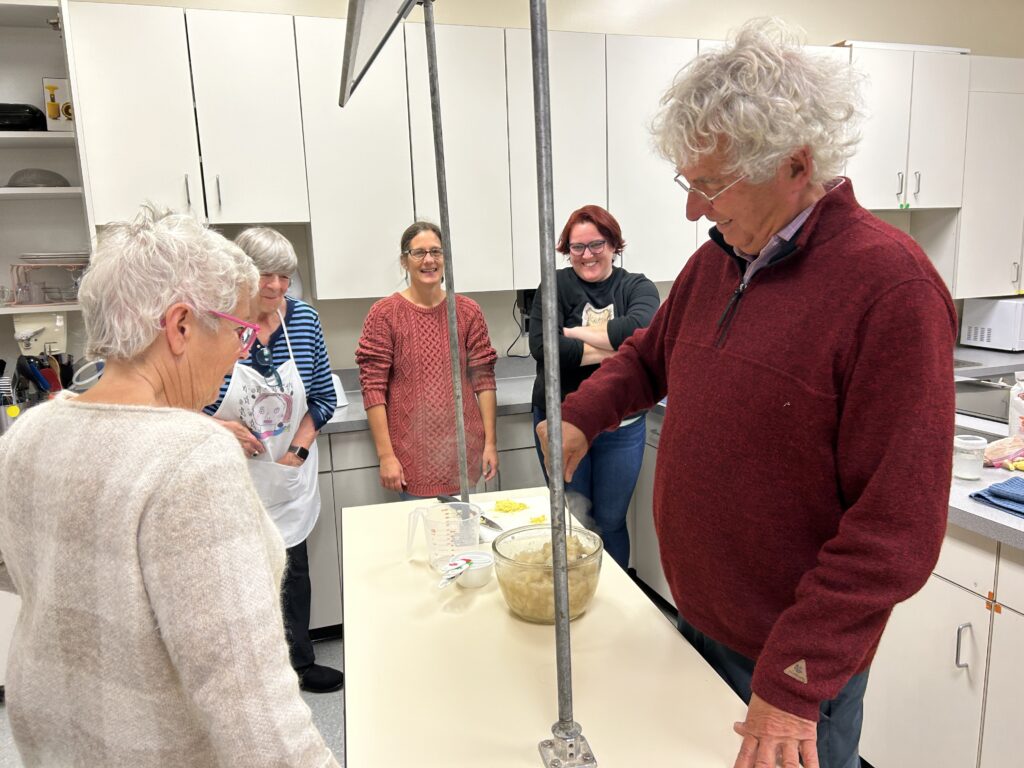
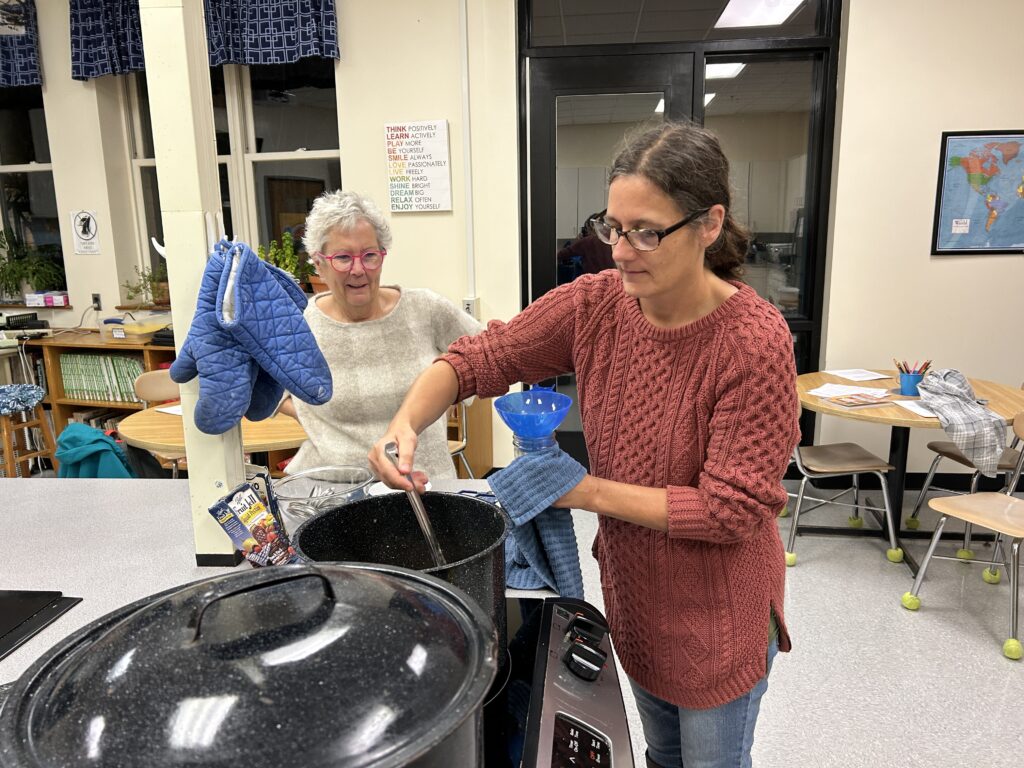
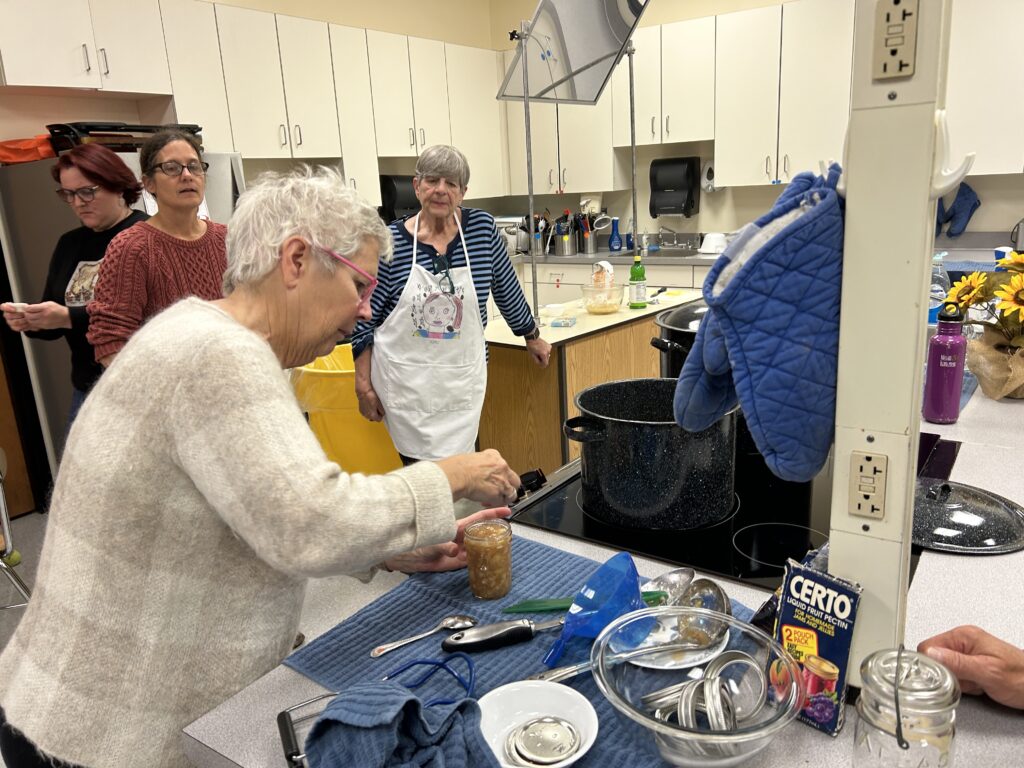
    In late October I had the opportunity to teach a canning class hosted by the Gastronomy M.L.A program at Boston University…..what a fun way to return to my Alma Mater!  I hadn’t been back to BU since I graduated in 2006, so it was a lot of fun to return for a visit and chat with some folks I hadn’t seen in several years.  The program seems to be flourishing, and it’s really fantastic to hear that enrollment has increased tremendously over the past few years.  It’s quite a diverse program, accommodating students with varying interests and areas of focus within the field of food studies, so if you have an interest in any aspect of food studies, it’s a program definitely worth looking into.  We had a great group for the canning class–students from the Gastronomy program, as well as a couple of other folks who live in the area.  And what do you think we made during the class?   If you guessed something with pears, you would be correct!  After all, when you’re trying to use up 70 unexpectedly-acquired (though very welcome!) pounds of of pears before they’re over-ripe, you do what you can, right?  We made a delicious pear-ginger jam….and put to good use almost ten pounds of lovely fruit!   For more on the class, check out Meg Jones Wall’s post about it on the BU Gastronomy blog.

    BU Canning Class, Oct. 2011

    BU Canning Class, Oct. 2011

    BU Canning Class, Oct. 2011

    BU Canning Class, Oct. 2011

    BU Canning Class, Oct. 2011

    BU Canning Class, Oct. 2011

    • Tweet
    • Share on Tumblr
    • submit to reddit

    Canning, Classes, News & Upcoming Events, Preserving

    Canning, Classes, Preserving

  • A Windfall of Pears

    Jan 7th 2012

    By: Allison

    1 comment

    Pears 2011

    For the past few years, in the fall, the boys and I have taken a road trip to Hope Orchards for our annual supply of pears.  As  much as I didn’t want to, I’d actually resigned myself to skipping the trip and the pears this year, given the chaotic state of our lives with the move (and all the yet to be harvested kale patiently waiting for my attention), reminding myself that sanity was at least (or almost?) as important as a pantry full of home-canned goods.  But then….a generous soul in one of the email groups that I participate in was giving away all of the pears from the tree in his back yard!  I mean, how could I refuse THAT?   So that’s how I acquired, oh, about 70 pound of pears.  My step-mom Ann came over and we canned a lot of them in unsweetened apple juice.  This is one of my favorite ways to preserve pears, and over the past few years pears put up this way have become one of the work horses our pantry, as they’re a great winter time substitute for fresh fruit, and they don’t contain any added sugar–just what’s found naturally in the apple juice.  I also did a lot of dehydrating, which is another great option.  They’re very sweet and delightfully chewy.  This is probably my boys’ favorite ways to eat them–and yes, sadly, our stash of dried pears is already gone….and it’s only January!  I made one of my favorite jams, too–pear-ginger jam.  Thank goodness the pears were quite under-ripe when I got them……that bought me some extra time, and somehow I managed to get them all put up before they spoiled.  Here’s to a quite unexpected pantry full of pears! Pears 2011

    PEAR-GINGER JAM
    Makes 8-10 half-pint jars
    Note: this recipe requires 1 package of Pomona’s Universal Pectin, available at specialty and natural food stores.

    To Do Ahead of Time:

    ***Prepare the calcium water (included in the Pomona’s Universal Pectin package).  To do this, combine 1/2 teaspoon white calcium powder with 1/2 cup water in a small, clear container with a lid. Shake well before using.  Note that you will have more calcium water than you will end up using in this recipe, and can save it for later use

    ***Wash and rinse pint jars, lids, and screw bands.  Set screw bands aside until ready to use.  Place jars in hot water bath canner, fill at least 2/3 of the way full with water, and bring to a boil.  Sterilize jars for 10 minutes, then turn down heat and let jars stand in hot water until ready to use.  Place lids in water in a small pan, bring to a low simmer, and hold there until ready to use.

    Ingredients:
    8 cups ripe pears, peeled, cored and mashed
    2 tbsp grated ginger root

    1/2 cup bottled lemon juice
    2 tbsp plus 2 tsp Pomona’s Calcium water
    2 1/2 cups sugar
    2 tbsp Pomona’s Pectin powder

    Directions:
    1.) In a large sauce pan, combine mashed pears with grated ginger, lemon juice and calcium water.

    2.) In a separate bowl, combine sugar and pectin powder.

    3.) Bring pear mixture to a boil, then add sugar mixture and stir vigorously for 1-2 minutes to dissolve the pectin. Allow mixture to come back to a boil, then remove from heat.

    4.) Remove hot jars from canner and fill jars with jam, leaving 1/4 inch of headspace. Remove trapped air bubbles, wipe rims with a damp cloth, and put on lids and screw bands finger-tip tight.

    5.) Place jars back in the canner, cover with lid, return to a rolling boil, and boil for 10 minutes. (Add 1 minute additional processing time for every 1000 feet above sea level.) Turn off heat and allow canner and jars to sit for 5 minutes. Then remove jars from canner and allow to cool undisturbed for 12-24 hours. Confirm that jars have sealed before storing in a cool, dry place.  Sealed jars have a shelf life of 1 year.  Once opened, keep jam in the refrigerator and use within two weeks. Enjoy!

    • Tweet
    • Share on Tumblr
    • submit to reddit

    Uncategorized

    • 1
    • 2
    • 3
    • ...
    • 9
    • >
  • WELCOME!

    I'm Allison Carroll Duffy, and I'm a cook and foodcrafter, Master Food Preserver, vegetable gardener, and mom of two young boys. My goal is to inspire people to do more canning and preserving, foodcrafting, and home cooking, and to bring the traditional arts of the kitchen back into our homes and everyday lives. I hope you'll join me....and, thanks for stopping by!
  • All content © Allison Carroll Duffy unless otherwise indicated. Above photo of Allison © Jeff Scher
  • Categories

    • Baking
    • Canning
    • Classes, News & Upcoming Events
    • Cooking
    • Culturing & Fermenting
    • Drying
    • Family Meals
    • Food Craft
    • Food Culture, History & Traditions
    • Foraging & Wild-Harvesting
    • Freezing
    • Gardening
    • Gardening & Outdoors w/ Kids
    • Holidays & Celebrations
    • In the Kitchen with Kids
    • Kitchen & Pantry Staples
    • Kitchen Tools & Equipment
    • Local Food Excursions
    • Local Food Excursions w/ Kids
    • Pickling
    • Preserving
    • Recipes & Methods
    • Television & Video
    • Uncategorized
  • Blogs, Websites & Other Resources

    • Association for the Study of Food and Society
    • Broadturn Farm
    • Canning Across America
    • Delicious Musings
    • Doris and Jilly Cook
    • Eat Local Foods Coalition
    • Food For Maine's Future
    • Food History News
    • Food in Jars
    • food52
    • Gastronomica
    • Gastronomy at BU
    • Kitchen Gardeners International
    • Maine Organic Farmers and Gardeners Association
    • Michael Ruhlman
    • Mrs. Wheelbarrows Kitchen
    • National Center for Home Food Preservation
    • Orangette
    • Punk Domestics
    • Rabelais Books
    • Radical Homemakers
    • Slow Food International
    • Slow Food Portland, Maine
    • Slow Food USA
    • Small Measure
    • SouleMama
    • Southern Foodways Alliance
    • Ten Apple Farm
    • The Hip Girl's Guide to Homemaking
    • The Irresistible Fleet of Bicycles
    • Tigress in a Jam
    • Tigress in a Pickle
    • University of Maine Cooperative Extension–Food Preservation
    • Urban Farm Fermentory
    • Wild Fermentation
    • You Grow Girl
  • Site Admin.

    • Log in
    • Entries RSS
    • Comments RSS
    • WordPress.org

© Copyright CanningCraft. All rights reserved.